For much of ancient Egyptian history, Memphis was the capital — the city from which the pharaohs ruled the Two Lands and whose cemeteries stretched along the desert from Giza to Dahshur. Today, the site of Mit Rahina is a quiet village among palm trees, with the city’s remains largely buried beneath the fields.
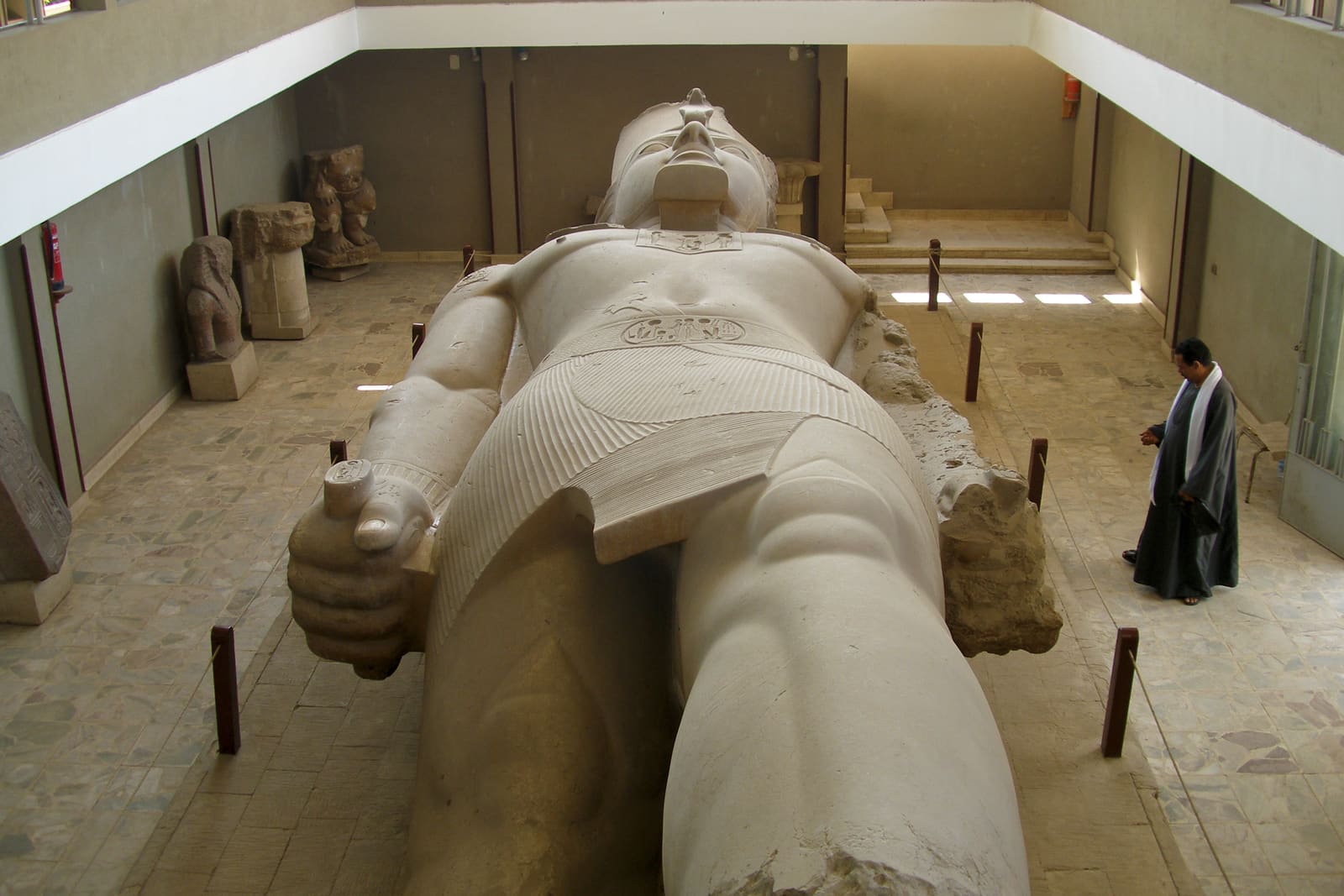
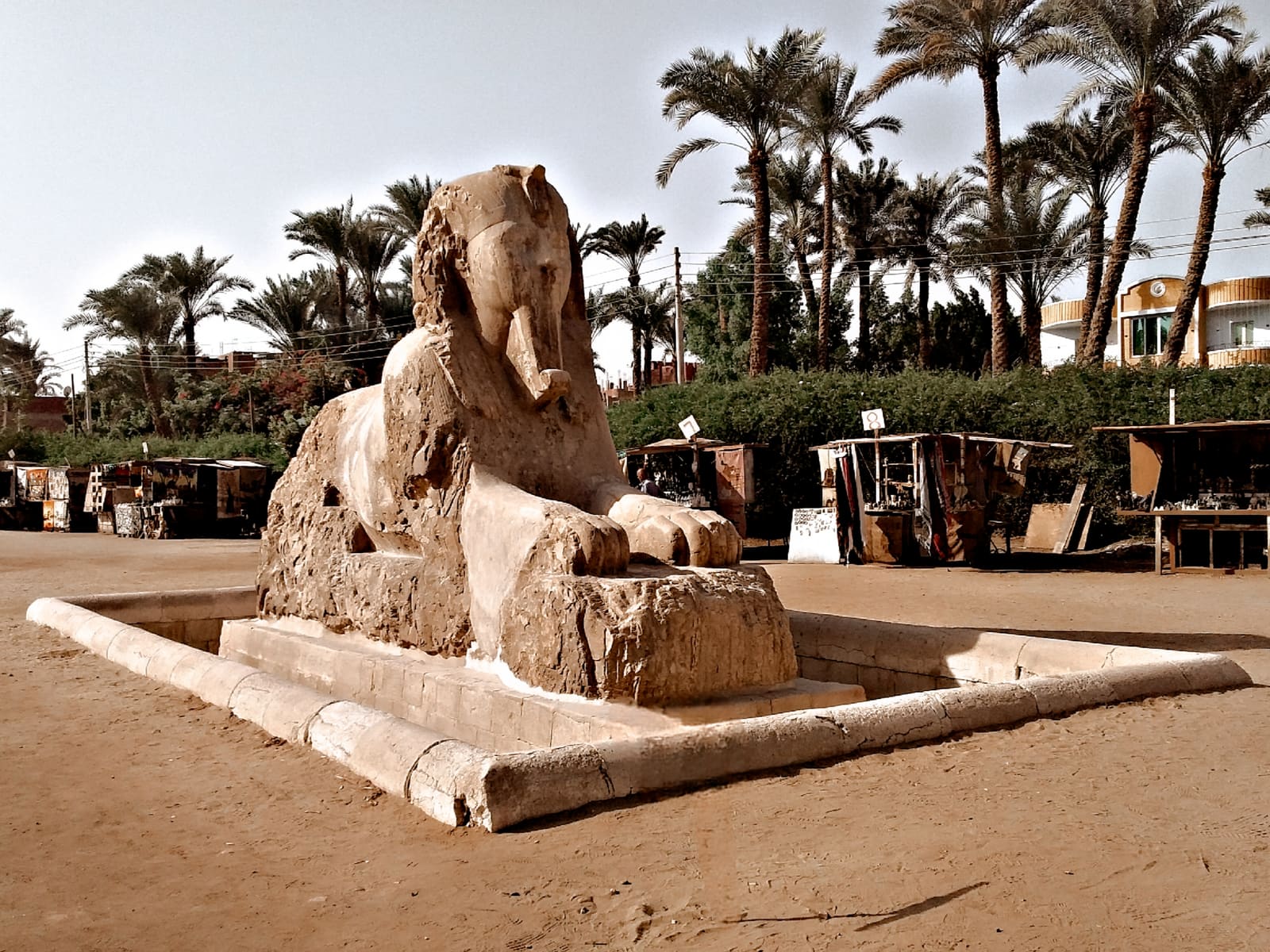
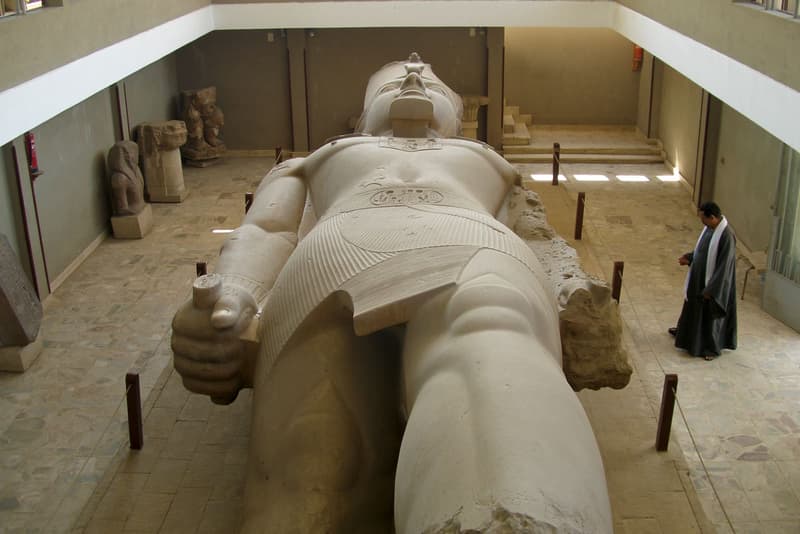
The small open-air museum is where you meet Memphis’s treasures. The star is a colossal limestone statue of Ramesses II, roughly 10 metres long even without its lower legs, displayed lying down inside its own pavilion. Outside, an alabaster sphinx and other statues sit among the palms.
Top things to do
Look down on Ramesses II
A gallery lets you view the colossus from above, admiring the fine carving of his face, cartouches and belt.
Meet the alabaster sphinx
Carved from a single block of calcite, this serene sphinx is one of the largest ever found in that material.
Stroll the garden of statues
Stelae, sarcophagi and statues from the vanished city dot the garden — a quick, shady stop between Saqqara and Dahshur.
How to get there
- Memphis lies in the Nile valley just east of Saqqara, about 15 minutes by car from both Saqqara and Dahshur.
- It is included in most Saqqara–Dahshur day tours.
- 45 minutes is usually enough for the museum.
- The site has souvenir stalls — browse, but bargain politely.
Best tours that include Memphis (Mit Rahina)
These top-rated experiences are the easiest way to visit Memphis (Mit Rahina) — with transport from Cairo or Giza and a guide who brings the stones to life:
 Half-day tour from US$60
Cairo: Memphis, Sakkara & Dahshur Pyramids
- The three sites south of Cairo in one morning
- Skip-the-line entry arranged
Best for: Travellers who want the south-of-Cairo trio in a morning
 Day trip · Entry fees included from US$53
Cairo: Saqqara, Memphis & Dahshur Day Trip with Lunch
- All entry fees included — no card juggling at the gates
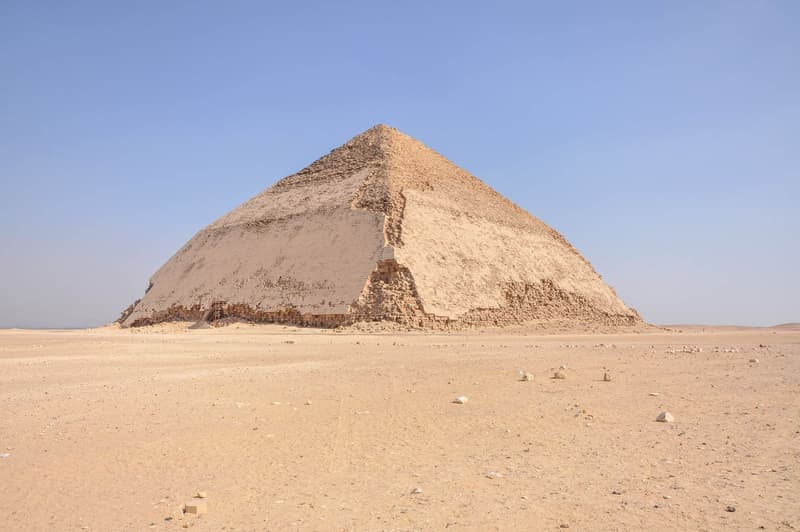
- Step Pyramid of Djoser, Red & Bent Pyramids, Memphis
Best for: Travellers who want everything included and no surprises
 Private half-day from US$58
From Cairo: Dahshur & Memphis Private Half-Day Guided Tour
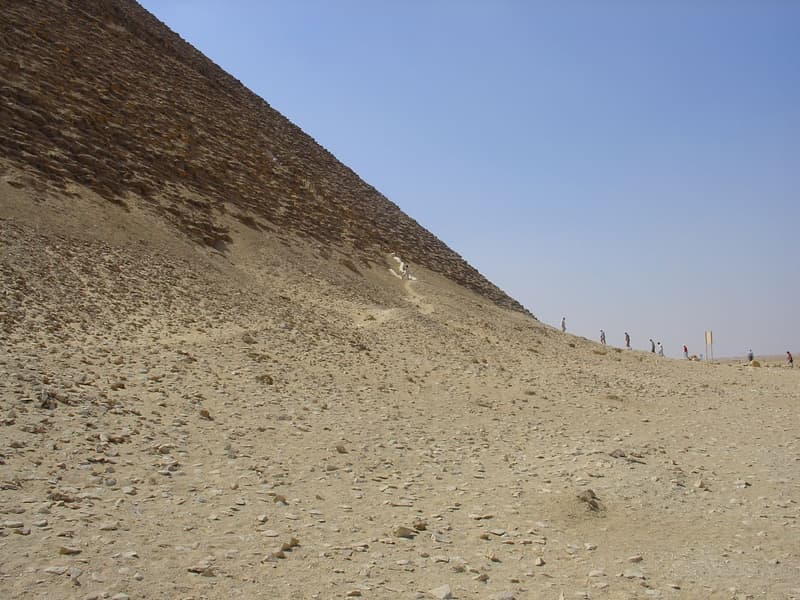
- Red Pyramid and Bent Pyramid with a private guide
- Memphis, the first capital of united Egypt
Best for: Short stays and afternoon slots